Beyond The Annual Payment – Additional Benefits of Countryside Stewardship – Rosie Uden (Chippenham)
A stable income for environmental good is not affected by global markets. Annual payments for the Countryside Stewardship Scheme (CSS) are a welcome addition to many businesses. Despite this, some believe there is little incentive as the payments are based upon income foregone from the standard activities you could carry out on the land and thus the RPA are not providing additional profit as a motivator. However, additional profit can be achieved from supporting the environment and it is important to understand the additional benefits different CSS options can offer your business.
GS4 Legume and herb rich swards
With a payment rate of £309/ha, GS4 has become increasingly popular. Established correctly on suitable land the sward should produce good grazing and silage opportunities. Due to the clover and other legumes in the sward no inorganic fertiliser should be applied and given the current price of nitrogen fertiliser at £600/ tonne, substantial savings can be made in addition to the yearly payment.
Plots and margins (AB1, AB8, AB9, AB16)
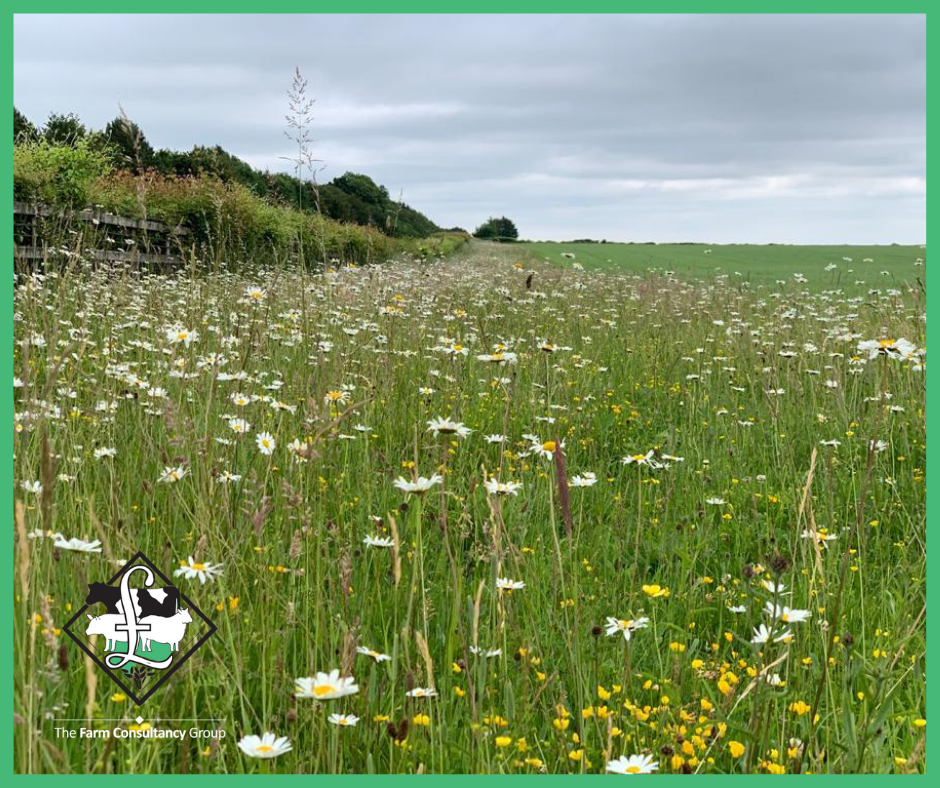
Payment rate for flower margins range from £511 to £640 per hectare which is acceptable given the majority of plots are sited in more marginal areas of land where machinery access is poor or yields inadequate. There should be a high-quality floral resource to provide nectar and pollen to a variety of beneficial pollinators such as bumble bees, solitary bees, butterflies and hoverflies. Arguably in the UK the majority of lowland cereal crop production is not reliant on pollinators. However, with field beans, clover and horticultural crops being reliant on pollinators, it is no wonder the benefit of pollinators to UK producers is estimated at £500 million a year (gov.uk). Not only do the margins attract pollinators but other beneficial insects too, such as parasitic wasps which lay their eggs in adult flea beetle or hoverflies which feed on aphids.
AB15 Two-year sown legume fallow
One of the major challenges for arable enterprises is blackgrass. 10 blackgrass plants per a metre square lead to a 13% decrease in crop yield (BASF, 2018). To combat weeds, a two-year sown legume fallow is offered through CSS, paying £522/ha for a legume break crop. Admittedly this figure is significantly lower than the gross margin for winter wheat but with the expectation that yields should increase and herbicide usage decrease after the fallow, the future economic benefit should be considered.
SW6 Winter cover crops
It is tempting to leave stubble or the ground bare over winter to get a stale seed bed to control weeds. However, one study found 77kg N/ ha leached when stubble was left in comparison with only 0.6kg N/ha when a radish cover crop was established. Presuming fertiliser had been used with a 34% nitrogen content at £600/ tonne that is a loss of over £130/ ha. Given the payment rate is £114/ha there is plenty of allowance for establishment costs to make the most of future nitrogen savings.
This summarises just a few of the additional benefits of CSS, where the above options inadvertently improve the profit line of your business.
Contact Rosie at rosieuden@fcgagric.com or your local FCG Office, to see what options in the 2022 Environmental Stewardship Schemes could benefit your profit as well as the environment on your farm.
Categories
- Andover
- Arable & Crops
- Avon Meadow Sheep Group
- Beef
- Business Briefing
- Business Briefings
- Business Management
- Calne Dairy
- Carmarthen
- Chippenham
- Dairy & Forage
- Dairy Farming
- Discussion Groups
- Diverse Swards Group
- Diversification
- Environment
- Farm Assurance
- Gillingham Grazers
- Gloucester
- Grant Funding
- Guest article
- Health and Safety
- Human Resources
- Lincoln
- Midwest Grazers
- Milkwell Group
- News
- North Wiltshire Arable Group
- Office
- Organic
- Pigs
- Planning
- Regenerative farming
- Sheep
- Sherborne
- Soil
- South West
- Staff News
- Stafford
- Technical Update
- Uncategorized
- Wessex
- Wessex Springers
- WHDDG