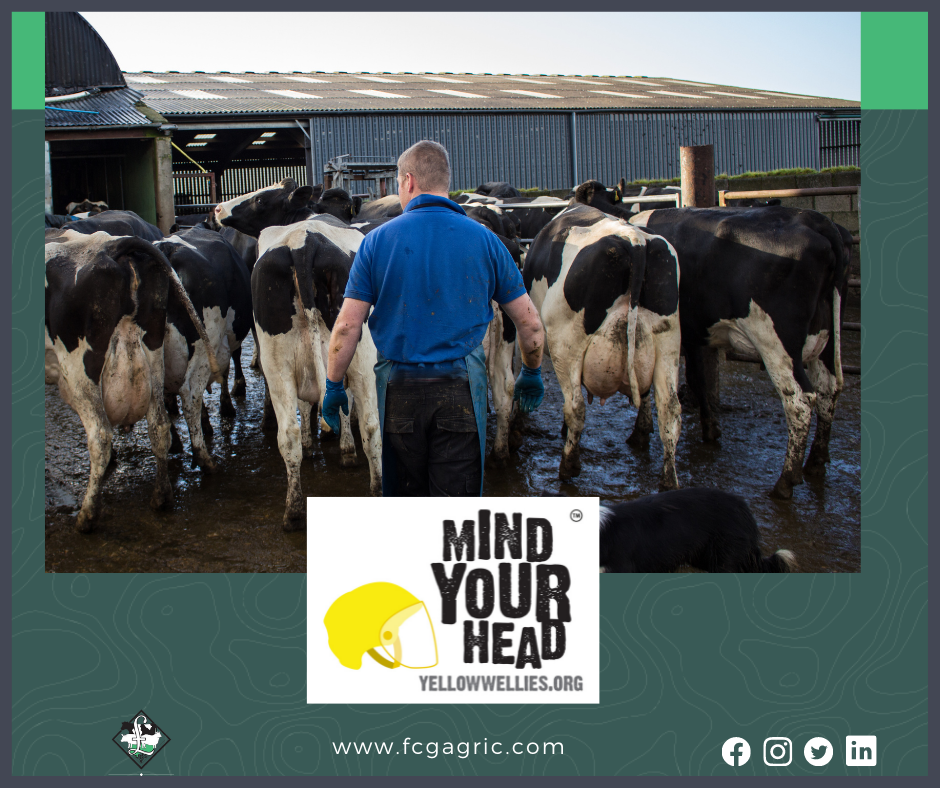
Dorset Dairy Farming business IP and CJ Pickford explains why it’s important to think about staff morale and communication, whilst being mindful of individuals mental health:
As a business, it is important to us to retain our staff and have good morale within the team. We try to achieve this by doing the following :
Staff work a five-day week, aiming for working 40hrs and no more than 50hrs/wk. Employees work every other weekend and have two days off during the week that they work weekends. (The exception to this is during the busy calving period from the end of Feb to the middle of April when they work six days and have one day off at the weekend)
Everyone has 28 days holiday/year
We have a weekly breakfast meeting in the kitchen when we can find out what went well/not so well the previous week. We can also plan the forthcoming week with jobs that need doing and discuss grass measurements on Agrinet so that they have an understanding of the rotational grazing for the week. This is also written on a whiteboard in the office.
We have various protocols written on whiteboards/laminated sheets in the dairy/office/calving shed, and we have a WhatsApp group which everyone is encouraged to write on so that everyone sees the information.
We chat on a one-to-one basis informally, whilst working with staff to see if all is well. We also make sure that we say good morning to everyone and to wish them a good time off and to enquire if they did upon their return.
Staff are also encouraged to join discussion group meetings to gain further info and to see other farms. They can also have one training course a year paid for.
To have a more professional approach to staff appraisals we have started to use an outside facilitator to benefit both employer and employee.
The staff have a well-equipped office/restroom with chairs/heater/fridge/kettle/microwave/toaster with bread, butter, tea, coffee, always provided. Treats as biscuits/chocolates/cake are often provided (always good for morale!) and occasionally they will taken out for lunch.
Younger staff are encouraged to progress within the business by gradually giving them more responsibilities and also to travel, particularly to go to New Zealand to experience extreme grazing systems.
All staff are included in meetings with vets and when we have our quarterly visit from The Farm Consultancy Group, they are present whilst we discuss the practical topics of cow performance but only the management staff stay to discuss the financial topics. They all then know the direction we are going and how we plan to achieve this.
Farm life can be busy and everyone works hard but it must be made to be enjoyable so a work/lifestyle balance has to be found to encourage people into the business for long term success.
Categories
- Andover
- Arable & Crops
- Avon Meadow Sheep Group
- Beef
- Business Briefing
- Business Briefings
- Business Management
- Calne Dairy
- Carmarthen
- Chippenham
- Dairy & Forage
- Dairy Farming
- Discussion Groups
- Diverse Swards Group
- Diversification
- Environment
- Farm Assurance
- Gillingham Grazers
- Gloucester
- Grant Funding
- Guest article
- Health and Safety
- Human Resources
- Lincoln
- Midwest Grazers
- Milkwell Group
- News
- North Wiltshire Arable Group
- Office
- Organic
- Pigs
- Planning
- Regenerative farming
- Sheep
- Sherborne
- Soil
- South West
- Staff News
- Stafford
- Technical Update
- Uncategorized
- Wessex
- Wessex Springers
- WHDDG