William Waterfield (Andover)
The Sustainable Farming Incentive which aims to be less prescriptive than Countryside Stewardship (CS) could more than compensate for the loss of the Basic Payment Scheme income without taking land out of production. For example options:
- SAM3 Herbal leys pays £382 / ha
- SAM2 Legumes on improved grassland which pays £102 / ha
The payments for arable crops that will interest organic farmers are:
- NUM 3 Legume Fallow pays £593 / ha
- IPM 3 Companion crop on Arable and Horticultural land £55 / ha
- IPM 4 No use of Insecticide on Arable crops and Permanent crops £45 / ha
- SAM 2 Multi Species winter cover crops which pays £129 / ha
Compared to Stewardship, the three year commitment required by the SFI is attractive compared to the five years in a stewardship agreement with the added flexibility that you can increase or decrease the area in an option on an annual basis within your SFI agreement. The SFI has an expectation that the farmer will manage the option ‘in a way that could reasonably be expected to achieve this action’s aim’.
For organic farmers organic maintenance payments OT1, OT3, OT4 and OT5 and the corresponding conversion options can be stacked on top of an existing Countryside Stewardship agreement. Many of the SFI options are duplication of CS options. There are subtle differences in the two schemes which often make the SFI more attractive.
For the first time the SFI includes a one-off payment of £20 / ha for up to the first 50 ha – a maximum payment of £1,000 to help with the preparation of the application. Additional payments are available for assessing the condition of hedgerows, assessing the condition and testing soils for organic matter, assessing the condition of moorland and preparing a plan. Two of the most agronomically important SFI options are for Integrated Pest Management (IPM) and Nutrient Management (NM) both of which have an annual payment for their preparation but need to be signed off by a BASIS or FACTS registered advisor.
Many organic farmers already have quite complex stewardship agreements which include taking significant areas out of production. The SFI offers organic farmers the chance to stack payments on existing CS agreement options without taking any areas out of production. For example, you can stack:-
- CS option OT3 Organic Maintenance rotational ground with SAM 3 Herbal Leys the combined payment would be £514 / ha.
- IPM3 Companion crops (£55/ ha) with IPM 4 No use of Insecticides (£45 / Ha) on any organic arable crops receiving OT3, combined payment of £232 / ha an under sown cereal or a bye crop of a cereal and a protein are examples of companion crops.
- HRW1 Assessing and Recording Hedgerow condition and HRW 3 Maintaining or Establishing hedgerow trees can be stacked with Stewardship option BE 3 Hedgerow management giving a payment of £33 / 100 m of hedgerow.
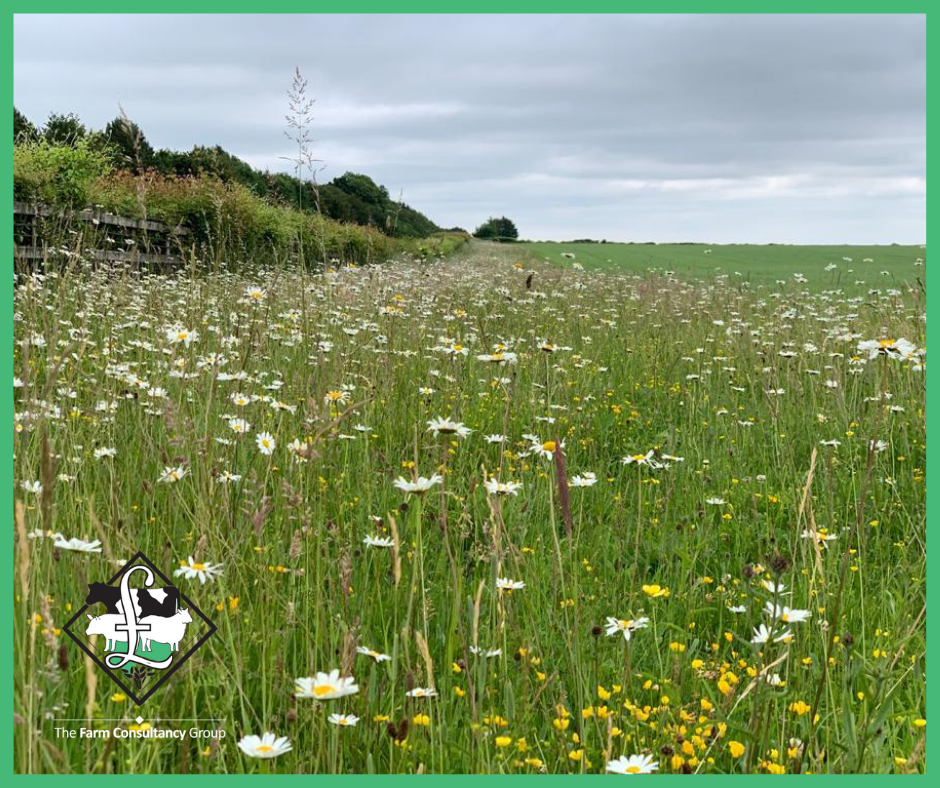
SAM 3 Herbal Leys which pays £382 / Ha offers organic livestock farmers a significant additional income and many will have leys that can be entered directly into the scheme and comply with requirements that you ‘establish and maintain herbal leys with a mixture of grasses, legumes, and herbs for the period of the agreement’ and that ‘you do it in a way that can reasonably be expected to achieve this action’s aim’. The alternative where the ley does not meet the criteria is NUM 2 ‘Legumes on Improved grassland’ which pays £102 / ha.
For the organic arable farmer, NUM3 Legume Fallow with a payment of £593 / ha may be an attractive fertility building option remembering that ‘you must sow a seed mix containing at least 6 flowering species including legumes’ and managing it by not cutting or grazing it, except to prevent blackgrass from setting seed or to control other annual grass weeds and that the option is in place ‘for a period of time that could reasonably be expected to achieve this action’s aim.’ Although this option looks attractive, the restrictions on topping and the risk of a very high seed return from the legumes should not be ignored. As a rotational option this may be attractive for the first year of fertility building phase when subsequent years can be taken for silage.
Other fertility building options include Lucerne, Sainfoin or clover leys which are eligible under NUM2 ‘Legumes on Improved grassland’ paying £102 / ha and when stacked with CS option OT3, the total payment is £234 / ha. An alternative for lucerne or sainfoin being used exclusively for conservation, could be to stack IPM 3 ‘Companion crop on arable and horticultural crops’ at £55 / ha (so long as there was a companion / understory crop) and IPM 4 ‘No use of insecticide on arable crops’ @ £45 / ha together with the CS payment for OT3 £132 / ha making the total payment worth £232 / ha.
When it comes to taking part of fields out of production then the following options are a direct counterpart to Stewardship options
- IPM2 Flower-rich grass margins, blocks, or in-field strips which pays £673 / ha
- AHL 1 Pollen and nectar flower mix total or part £614 / ha
Want to know more about the SFI and how it can fit in with your organic farming practices? Contact William at W.Waterfield@fcgagric.com or your local FCG Office.
Categories
- Andover
- Arable & Crops
- Avon Meadow Sheep Group
- Beef
- Business Briefing
- Business Briefings
- Business Management
- Calne Dairy
- Carmarthen
- Chippenham
- Dairy & Forage
- Dairy Farming
- Discussion Groups
- Diverse Swards Group
- Diversification
- Environment
- Farm Assurance
- Gillingham Grazers
- Gloucester
- Grant Funding
- Guest article
- Health and Safety
- Human Resources
- Lincoln
- Midwest Grazers
- Milkwell Group
- News
- North Wiltshire Arable Group
- Office
- Organic
- Pigs
- Planning
- Regenerative farming
- Sheep
- Sherborne
- Soil
- South West
- Staff News
- Stafford
- Technical Update
- Uncategorized
- Wessex
- Wessex Springers
- WHDDG