Jessica Rippon (Chippenham)
Reflecting on our visit to Groundswell 2024, a talk that stood out to me was the successes and failures of cover cropping hosted by Joe Stanley, with speakers Tom Jewers, Toby Simpson and Jim Egan.
With the Sustainable Farming Incentive having payments for spring sown, summer sown and winter cover crops, more farmers are discussing introducing cover crops to their rotations. The establishment and use of cover crops is renowned for being a crucial factor in regenerative agriculture, especially soil health. So, what successes and failures were discussed?
Generally speaking, cover crops are not always treated as a crop in their own right. The ongoing management of the cover crop is not usually at the level it needs to be, and corners are often cut. If the management is neglected, the objectives of the cover crop are not going to be met, and they will not be adding to your rotation. Cover crops need investment like any cash crop!
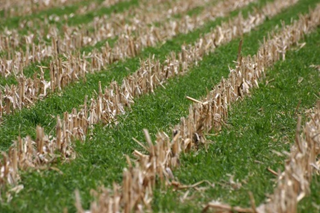
Another key point is to plan your cover crops well. What are you wanting to achieve from the crop? What are your objectives? For example, are you wanting to capture nutrients? If so, include species such as radish. It is vital to select the correct mix for not only the land type, but also the objectives you are working towards.
To give yourself more of a chance of establishing cover crops, with the changing weather we are facing, drilling a multi species mix is crucial. Every year the weather is different, and drilling several species will improve your chances of something succeeding.
The most important message I took from the talk is that having living roots in the soil year-round is key, therefore cover cropping is not just for the winter. With a year like we have just had, there are large parcels of land that have not had crops established due to particularly wet weather. Leaving these fields bare will put you in a more difficult position come autumn. Even a gap between harvesting an early crop in July to drilling in mid-September, there is time to put fast growing annual crop in (such as buckwheat) that will convert sunlight into energy to benefit the soil. This will be aerating it, fixing and capturing nutrients left behind and building soil carbon. Covering bare ground is a huge benefit for soil health.
For more information about cover cropping, or to discuss the SFI options in more detail, please contact Jessica Rippon at jessicarippon@fcgagric.com or your local FCG Office.
Categories
- Andover
- Arable & Crops
- Avon Meadow Sheep Group
- Beef
- Business Briefing
- Business Briefings
- Business Management
- Calne Dairy
- Carmarthen
- Chippenham
- Dairy & Forage
- Dairy Farming
- Discussion Groups
- Diverse Swards Group
- Diversification
- Environment
- Farm Assurance
- Gillingham Grazers
- Gloucester
- Grant Funding
- Guest article
- Health and Safety
- Human Resources
- Lincoln
- Midwest Grazers
- Milkwell Group
- News
- North Wiltshire Arable Group
- Office
- Organic
- Pigs
- Planning
- Regenerative farming
- Sheep
- Sherborne
- Soil
- South West
- Staff News
- Stafford
- Technical Update
- Uncategorized
- Wessex
- Wessex Springers
- WHDDG