David Green (FCG Midwest)
Do you remember the government slogan “Public money for Public goods”, this was the foundation of the ELMS model of which SFI was part of, how long that lasted we all know and how much value is installed in it going forwards is anyone’s guess. What DEFRA did until they ran out money was trying to highlight that Natural Capital goods can be a product of land use. We have been accustomed to food production and energy production, but Natural Capital production is a product from the land also.
As the government have made very clear, budgets are limited in being able to pay for all the Natural Capital being produced on the land, so as custodians of the land who are willing and able to produce this product, should the focus now turn to who will properly value this asset and pay for its production. In a strange sort of way DEFRA through the ambitious ELM scheme has brought this to the attention of many outside pure farming and shown a way in which on farm practices and habitat creation can be rewarded through payments. Outside of the public purse, private industry has recognised that these practices and actions can be beneficial to their own story.
As this is clearly the case and there are many examples of this happening should those that continue with the land management practices that enhance Natural Capital look to move away for the uncertainty of Government backed schemes to the private markets. This is where the terms (BNG) – Biodiversity Net Gain, Carbon offsetting, and Nutrient Neutrality come into play. The private market tends to ignore the payment rate for herbal leys but rather reward certified accredited long-term schemes that enhance Natural Capital. So, by its very nature these schemes become more difficult to access, understand and be confident that it is properly rewarding the action.
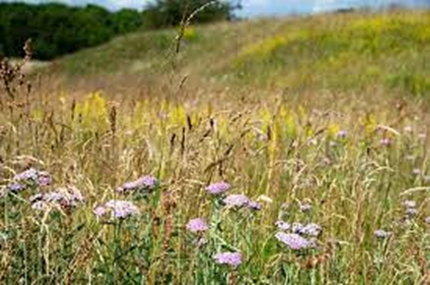
The question is often asked “how do we get into BNG markets?” “How do we sell our carbon?” It has been described quite rightly as the “wild west!”, with pop up brokers seeking to make trades and secure assets. With this market becoming ever more attractive, now is the time to really assess what Natural Capital you may have to sell, what you are prepared to generate on farm? and how much of it might be needed to satisfy ongoing commodity purchasers through supply contracts. This is certainly the starting point in any discussion on Natural Capital, I often talk about the “balance sheet of Natural Capital” whereby assessment of what is already on farm can be the baseline starting point for any future change. This can then lead to discussion on what proposed enhancement to the Natural Capital can be achieved and what this represents as a sellable product. Now is the time to seek proper value for enhancing Natural Capital on farm from private markets as they are continually to be either encouraged voluntarily to align themselves with these practices or are in a regulated industry that is forcing them this way.
Feel free to discuss your existing and potential Natural Capital with David, at dgreen@fcgagric.com or your local FCG Office, and we can help you understand your options for maximising the value of such assets.
Categories
- Andover
- Arable & Crops
- Avon Meadow Sheep Group
- Beef
- Business Briefing
- Business Briefings
- Business Management
- Calne Dairy
- Carmarthen
- Chippenham
- Dairy & Forage
- Dairy Farming
- Discussion Groups
- Diverse Swards Group
- Diversification
- Environment
- Farm Assurance
- Gillingham Grazers
- Gloucester
- Grant Funding
- Guest article
- Health and Safety
- Human Resources
- Lincoln
- Midwest Grazers
- Milkwell Group
- News
- North Wiltshire Arable Group
- Office
- Organic
- Pigs
- Planning
- Regenerative farming
- Sheep
- Sherborne
- Soil
- South West
- Staff News
- Stafford
- Technical Update
- Uncategorized
- Wessex
- Wessex Springers
- WHDDG