Max Sealy (FCG WhiteAvon)
Recently, Vicki and I have been lucky enough to spend some time touring around Australia, visiting the Western side, the Northern Territory, and Queensland. We did spend a bit of time meeting up with farmers in these areas, and I thought I would share a few thoughts on what we saw.
Particularly focusing on the dairy situation in Queensland, milk production has dropped massively over the last few years (Australia has dropped from producing 12 billion litres to 8 billion litres in total). Concentration in milk production is now in Victoria and New South Wales, which have a more favourable climate.

We met with Joe Bradley, from the East AUS Dairy Farmers Association, which provides support for dairy farmers throughout New South Wales and Queensland. Joe farms at Rush Creek, just north of Brisbane, milking around 200 Brown Swiss Cows on an intensive feeding system utilising factory by products. He has well-bred cows, leading to good milk production and solids, with a focus on the liquid market.
The issues with dairy farming in Australia are largely similar to those here. This also reflected in the other types of farming enterprises we saw, such as vegetables and sugarcane. There is a lack of succession, high labour costs, concerns over government taxation, including the potential for taxing unrealised gains, pressures on land use and environmental restrictions, as well as increasing animal welfare requirements.
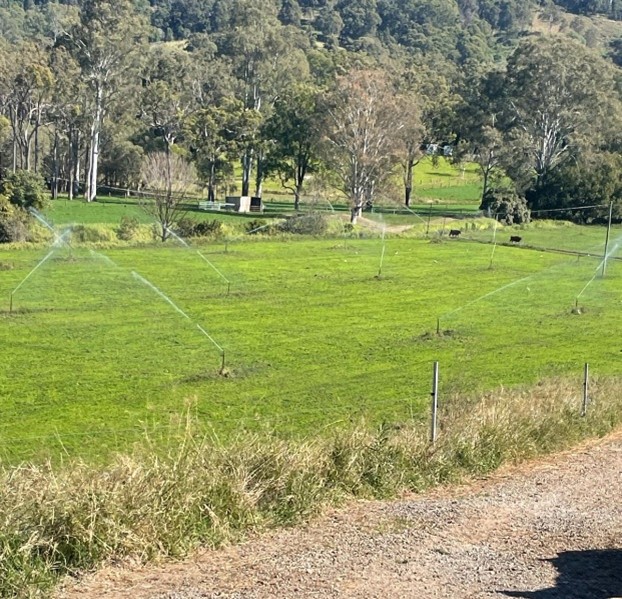
We also visited another farm further north in Queensland, in the Gimpi area, which was running a grazing-based system with set-state irrigation, enabling them to irrigate their ryegrass 365 days of the year. They calved all year round and were able to maintain grass production via the irrigation and thus had no housing or slurry disposal costs, and no need to make any conserved forage.
Milk price in Queensland is very similar to the UK, reflecting the transport cost of getting milk from the southern states, where milk prices are generally lower. Notably, Queensland enjoyed a good wet period and has sufficient forage (this was also reflected in the beef farms we saw), whereas the south of Australia is suffering badly from drought.
Overall, a need for investment, enthusiasm, and succession within the industry was reflected very similarly to discussions going on in the UK. Milk prices in the shops are very similar to the UK, all be it there are probably more specialisms, such as A2 Milk, trading at $1 per litre premium over ordinary milk. There is very little organic product on sale but quite a concentration on yogurt and other flavoured milk drinks. The cheese counters often included quite a bit of UK cheddar, which was good to see!
If you have any questions on Max’s trip to Australia and the farming practices they used, please contact Max on maxsealy@fcgagric.com
Categories
- Andover
- Arable & Crops
- Avon Meadow Sheep Group
- Beef
- Business Briefing
- Business Briefings
- Business Management
- Calne Dairy
- Carmarthen
- Chippenham
- Dairy & Forage
- Dairy Farming
- Discussion Groups
- Diverse Swards Group
- Diversification
- Environment
- Farm Assurance
- Gillingham Grazers
- Gloucester
- Grant Funding
- Guest article
- Health and Safety
- Human Resources
- Lincoln
- Midwest Grazers
- Milkwell Group
- News
- North Wiltshire Arable Group
- Office
- Organic
- Pigs
- Planning
- Regenerative farming
- Sheep
- Sherborne
- Soil
- South West
- Staff News
- Stafford
- Technical Update
- Uncategorized
- Wessex
- Wessex Springers
- WHDDG