Max Sealy (FCG WhiteAvon)
With the recent welcome rain many farms in the south of England have greened up and we are recalculating forage stocks with our clients based on some late cuts of silage now being taken. Due to the amount of regrowth and the fact that residuals were paired right back during the drought, there is actually some particularly good silage being made into either clamps or into bales.
This gives a new opportunity to recalculate forage deficits and make adjustments. Options still include selling surplus stock where there is insufficient forage and this should be calculated against the price of forage or other options.
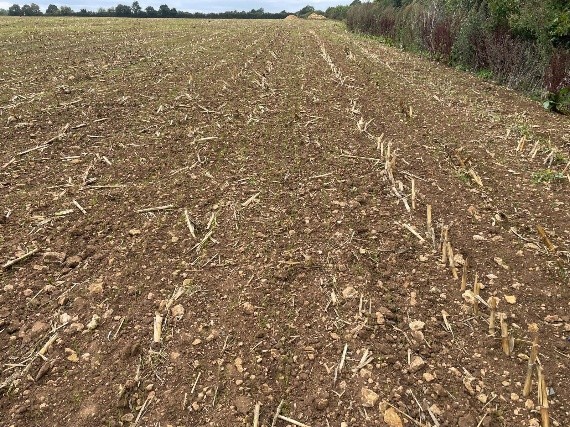
Another popular option this autumn is to plant grass seeds immediately after maize particularly where maize is in a continuous rotation being followed by maize for harvest 2026. Westerwolds or Italian rye grass can still be sown well into October and germinate well in the warm moist soils in the majority of situations. If planning to harvest forage this early for early cut in 2026, it is worth considering topping maize stubble to allow this to rot down, if the ground is going to be grazed and then put back into maize then this is less of a concern. The pictures below show westerwold rye grass established after an early cut of maize in the second week of September which has germinated well, this was established by front topping and a power harrow drill combination straight into the maize stubble following an opportunity to subsoil. Subsoiling will have worked well this year given the dry conditions and the opportunity to improve soil structure in long term should be built into short term decisions. It is important to calculate the cost of seed, planting and fertiliser and likely yield. This can then establish the cost of dry ton of matter of this forage. This can be compared to other options.

Contact Max at maxsealy@fcgagric.com or your local FCG Office, to assess your forage and feeding options this winter.
Categories
- Andover
- Arable & Crops
- Avon Meadow Sheep Group
- Beef
- Business Briefing
- Business Briefings
- Business Management
- Calne Dairy
- Carmarthen
- Chippenham
- Dairy & Forage
- Dairy Farming
- Discussion Groups
- Diverse Swards Group
- Diversification
- Environment
- Farm Assurance
- Gillingham Grazers
- Gloucester
- Grant Funding
- Guest article
- Health and Safety
- Human Resources
- Lincoln
- Midwest Grazers
- Milkwell Group
- News
- North Wiltshire Arable Group
- Office
- Organic
- Pigs
- Planning
- Regenerative farming
- Sheep
- Sherborne
- Soil
- South West
- Staff News
- Stafford
- Technical Update
- Uncategorized
- Wessex
- Wessex Springers
- WHDDG