Elizabeth Bell (FCG Midwest)
With water prices rising and a recent drought, reducing your water usage on farm is something you have probably already had cross your mind.
There are many options to reduce usage, here are a selection:
- Rainwater Collection. Rainwater is free so collecting it to use around the farm should help reduce costs. There are many ways of harvesting rainwater, depending on your scale and budget. A few things to consider:
- How will you pump the water around the farm?
- What will the collected water be used for? Does the water need to be filtered?
- How much rainwater will you be able to collect?
- A Reservoir. Similar to rainwater collection as you will collect water over the wetter periods to use during drier periods, particularly if your borehole supply risks running dry during a drought. Depending on the size of your reservoir you may need planning permission and to register it with the environment agency. Could it be a project for you and a neighbour to share costs and both benefit? Like the rainwater collection you need to bear in mind how you will pump the water from the reservoir around your farm and what the water is going to be used for as it may need filtering.
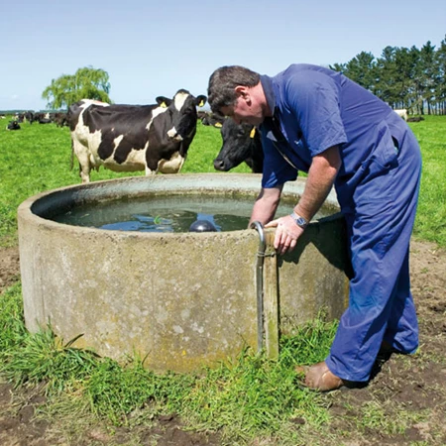
3. Reusing Water. Could you create a system where the water used for cooling milk is then used for washing down?
4. Cover Crops. Studies have shown planting cover crops have increased soil moisture which reduces the need for irrigation thus reducing water usage. The roots of the cover crops help prevent the soil from compacting by providing pores in the soil so that the water can infiltrate better – particularly in sandy soils. Cover crops should help reduce the number of weeds growing, resulting in less sprays being used therefore less water.
5. Multi Species Pastures. Lucerne and chicory have deep tap roots making them drought resistant. So, in years like 2025 they will continue to grow and produce forage without needing water.
6. Crop Genetics. By choosing varieties of crops that have better drought resistance should help reduce the amount of irrigation needed and moisture required from the soil.
7. No Tillage Systems. This allows the crop residue to stay on the surface which reduces evaporation and water run-off whilst helping improve soil structure and organic matter content, to maintain soil moisture.
If you would like to discuss possible options for your farm, please contact Elizabeth on elizabethbell@fcgagric.com or your local FCG Office.
Categories
- Andover
- Arable & Crops
- Avon Meadow Sheep Group
- Beef
- Business Briefing
- Business Briefings
- Business Management
- Calne Dairy
- Carmarthen
- Chippenham
- Dairy & Forage
- Dairy Farming
- Discussion Groups
- Diverse Swards Group
- Diversification
- Environment
- Farm Assurance
- Gillingham Grazers
- Gloucester
- Grant Funding
- Guest article
- Health and Safety
- Human Resources
- Lincoln
- Midwest Grazers
- Milkwell Group
- News
- North Wiltshire Arable Group
- Office
- Organic
- Pigs
- Planning
- Regenerative farming
- Sheep
- Sherborne
- Soil
- South West
- Staff News
- Stafford
- Technical Update
- Uncategorized
- Wessex
- Wessex Springers
- WHDDG