William Waterfield (FCG Andover)
I have recently been looking at mineral levels in fresh grass samples for a number of my organic clients as we try to ensure that we are not missing nutrients and trying to optimise performance.
As can be seen in the chart below, the results show the level of each nutrient found, and the accompanying bar chart indicates how these results compare to other samples. Looking at these, it is very easy to assume that a nutrient with a very low result is deficient.
The chart included below shows how easy it is to misunderstand the results. Firstly, there is no indication of critical levels for any nutrients, i.e. the level at which action is required. Secondly (not shown on the chart), the bottom of the report included a note to say “Selenium is below the limit of detection of 0.050mg / kg”, so that figure can’t be trusted at all.
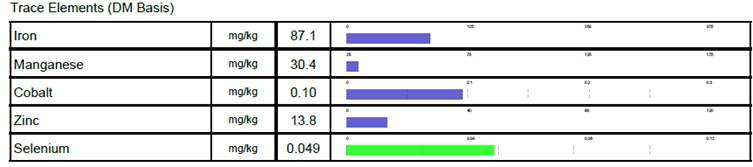
The critical level at which the lack of a trace element limits production varies depending on the soil and crop, but a guide seems to be:
- Iron 30-50 mg/kg
- Manganese 20-30 mg/kg
- Cobalt 0.15-0.2 mg/kg
- Zinc 15-20 mg/Kg
It is well known that manganese is critical for root crops and is affected by soil pH and soil organic matter. Clearly, some deficiencies will affect animal production and this needs addressing, but it may be easier to do it via the animal’s diet rather than trying to supplement the crop.
So, when trying to optimise production it is important to focus on the big things such as nitrogen supply and soil conditions. For organic farmers, that is all about legume production and management.
If you would like to understand your fresh grass sample results better, or would like advice on grass management, please contact William Waterfield at w.waterfield@fcgagric.com or your local FCG Office.
Categories
- Andover
- Arable & Crops
- Avon Meadow Sheep Group
- Beef
- Business Briefing
- Business Briefings
- Business Management
- Calne Dairy
- Carmarthen
- Chippenham
- Dairy & Forage
- Dairy Farming
- Discussion Groups
- Diverse Swards Group
- Diversification
- Environment
- Farm Assurance
- Gillingham Grazers
- Gloucester
- Grant Funding
- Guest article
- Health and Safety
- Human Resources
- Lincoln
- Midwest Grazers
- Milkwell Group
- News
- North Wiltshire Arable Group
- Office
- Organic
- Pigs
- Planning
- Regenerative farming
- Sheep
- Sherborne
- Soil
- South West
- Staff News
- Stafford
- Technical Update
- Uncategorized
- Wessex
- Wessex Springers
- WHDDG