Louise Cox (DBL Buying Group)
This is part of a series of articles featuring cost focus and control on our clients’ farms. At times of low commodities prices, cost control is, of course, a really important area and should be seen as a cultural way to approach farming, rather than reacting to low prices by trying to slash costs.
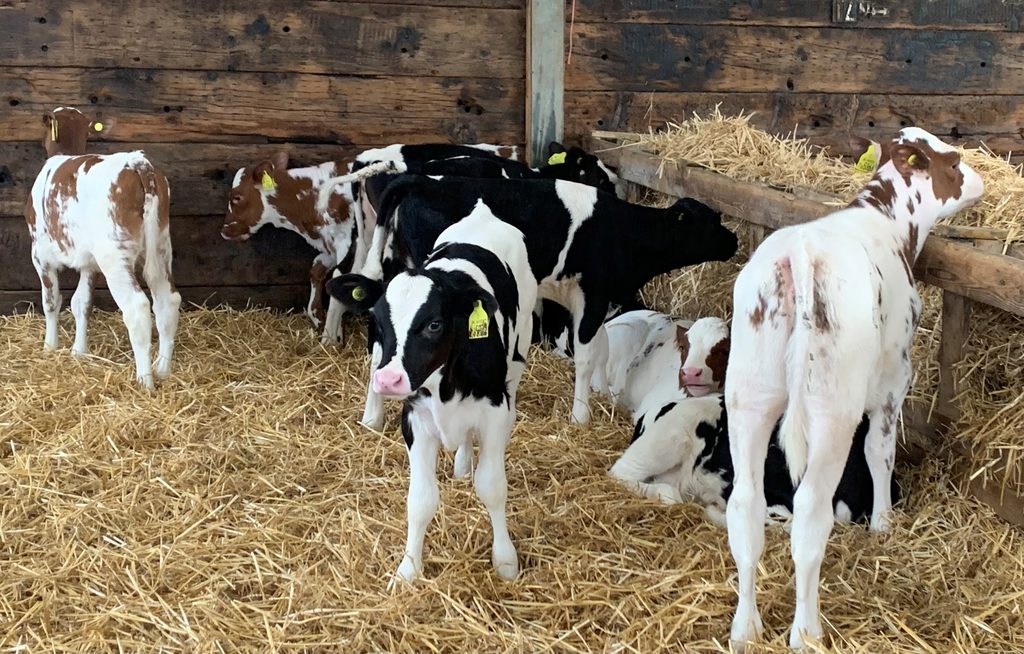
Numerous trials have demonstrated improved growth rates when calves are fed calf milk powder compared with feeding the same amount of solids in the form of whole cow’s milk.
Calf milk replacers are much more consistent, have added minerals and vitamins, are more digestible and have higher protein to fat ratios than whole milk. This results in faster growth rates, higher concentrate intakes and earlier rumen development.
Feeding milk replacer helps to minimise disease risk, in particular Johne’s disease. The use of waste milk also has the risk of antibiotic resistance and of feeding pathogens to the calves. This practice should be discouraged especially with calves intended to become dairy heifer replacements.
What to look for in a Calf Milk Powder?
Whilst most calf milk powders look the same, the quality of ingredients vary enormously. It is very difficult to distinguish between a quality product and a budget product made to a price. A wide range of ingredients can be used including skim, casein, buttermilk, whey, whey protein concentrate, soya and wheat, potato, pea protein concentrates together with a wide range of fats and oils.
The cheapest milk powders available are about half the price of the best quality products. The ticket declarations are of little help, and all products have a similar appearance – a creamy white powder.
Whey and vegetable proteins are much cheaper; but skim, casein and buttermilk-based products are digested much more efficiently. This is due to their ability to form a clot in the abomasum. The pH around the clot is at a very low pH, allowing the enzyme pepsin to efficiently digest the milk. Different sources of skim or whey can vary enormously in feed value depending on how they were produced and how much protein was denatured during the drying process. Generally, the higher the level of milk products in the milk powder the better.
The difficulty of distinguishing a quality calf milk powder from a budget product has meant that it has been much easier for manufacturers to sell products made to a price. Not surprisingly a lot of the UK market is for whey and vegetable protein-based products which contain no skim, casein or buttermilk.
Whey and vegetable protein products are generally lower in energy and are digested less well. This can result in faster uptake of dry feed, so these low-cost calf milk replacers do have a place. However generally we see better growth rates with far fewer health problems when ‘high quality’ milk powders are used rather than calf powders made to a price.
Most Cost Effective for Rearing Calves?
So, which is the most cost effective route? Well, it depends on the rearing system that you are using and on your expectations. Are you producing a replacement heifer, the future of your herd? Are you producing a beef calf that you want to top the market? Are you producing a beef animal destined for slaughter? Are you contract rearing to a price?
Higher quality products tend to be higher in energy with better digestibility and can often be fed at higher rates earlier without causing digestive upsets and nutritional scour. Thus, higher liveweight gains can be achieved.
Our view is that the best calf milk powders generally give better results and can often be cheaper to use in the long run, due to faster growth rates, lower mortality, lower vet bills, earlier weaning, reduced milk use and higher lifetime yields.
There is no question that dairy heifer calves which get off to a good start can produce higher lifetime milk yields and that replacement cost per litre can be reduced by doing calves better.
Doing heifer calves well can result in reduced dairy heifer replacement costs and increased lifetime milk yields.
Equally we have seen dairy units producing bull calves to sell at a few weeks old, halve their powder and straw usage, halve their stocking rate, dramatically reduce labour costs, vet bills and mortality and improve their sale price simply by switching to a better milk powder.
Feeding top quality milk replacer often costs less overall.
To discuss milk replacers and calf rearing please contact Louise at louise@dblbuyinggroup.co.uk, who will be able to recommend a milk replacer to suit individual requirements, or your local FCG Office.
Categories
- Andover
- Arable & Crops
- Avon Meadow Sheep Group
- Beef
- Business Briefing
- Business Briefings
- Business Management
- Calne Dairy
- Carmarthen
- Chippenham
- Dairy & Forage
- Dairy Farming
- Discussion Groups
- Diverse Swards Group
- Diversification
- Environment
- Farm Assurance
- Gillingham Grazers
- Gloucester
- Grant Funding
- Guest article
- Health and Safety
- Human Resources
- Lincoln
- Midwest Grazers
- Milkwell Group
- News
- North Wiltshire Arable Group
- Office
- Organic
- Pigs
- Planning
- Regenerative farming
- Sheep
- Sherborne
- Soil
- South West
- Staff News
- Stafford
- Technical Update
- Uncategorized
- Wessex
- Wessex Springers
- WHDDG