Jessica Rippon (Chippenham)
This month, as part of our WhiteAvon Office Training, we visited one of Germinal’s trial farms. Paul Morgan, Area Sales Manager, and Dr Joanna Mathews, Technical Trials Manager, hosted a morning session covering grass seed mixes, herbal leys, clover, and the Sustainable Farming Incentive.
So, who are Germinal?
Germinal is a sixth-generation family company specialising in forage and amenity seeds. They have ongoing investment into innovation, research, and knowledge of forage seed options.
Sustainable Farming Incentive
The training session was mainly focused on the Sustainable Farming Incentive and how different seed mixes and options will work for different farms.

Establishing SAM3 – Herbal Leys
- To establish an herbal ley, it is recommended to scratch the seed at a very shallow depth of 1cm ‘into the dust’. Then to roll/consolidate it afterwards.
- Another option is to overseed an existing sward, you would need to graze it down tightly, harrow to take the thatch out, then stitch in the seed with a drill, roll and graze for 5-7 days afterwards.
- Cross drilling is another method recommended; the first pass should be 10mm deeper than the second pass. The seed just wants to be scratched in and if you are going to roll, you are better off using ring rollers to prevent capping. This is to ensure good seed to soil contact and helps ensure a higher success rate.
- If you have planted an herbal ley and intend to cut it, use a mix without chicory. When chicory goes to its reproductive phase, it becomes unpalatable, and the stalk gets very hard. This stalk will pierce silage wrap once baled.
Establishing NUM2- Legumes
- If you are trying to add clover into an existing grass sward, it is recommended to graze the sward down tight first.
- When drilling, if the ground has lots of dead matter it is recommended to use Calciprill, a granular product, as the old decaying grass will turn acidic affecting the germination of the new seeds planted.
- Red clover is higher in protein than white clover, but the grazing point of the clover can be damaged more easily through grazing. This is why red clover is recommended for cutting swards and white clover for grazing swards.
- Clova Plus is a chemical coming to the market soon, which is a clover safe spray to be used on grassland.
Practical Messages
Some practical tips we learnt from Paul and Jo include:
- When trying to identify if a field needs reseeding, it can be useful to pick some grass and inspect the stem. Typically, perennial grass is red on the stem, and when grass is white on the stem it indicates it’s a ‘weed’ and needs reseeding as it isn’t as productive.
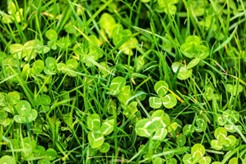
- When looking at a field of clover, if it looks like 30% of the field is taken up with clover, it is usually only half of this! This is due to the leaves of the clover covering more surface area.
- Grass starts growing at 5 deg C, whereas clover starts growing at 8 deg C. This is why clover takes longer to start growing in the spring.
For advice on establishing clover and herbal leys and helping you decide what method is best for time of year and soil/sward conditions, contact your agronomist, or Jessica at jessicarippon@fcgagric.com or your local FCG Office.
Categories
- Andover
- Arable & Crops
- Avon Meadow Sheep Group
- Beef
- Business Briefing
- Business Briefings
- Business Management
- Calne Dairy
- Carmarthen
- Chippenham
- Dairy & Forage
- Dairy Farming
- Discussion Groups
- Diverse Swards Group
- Diversification
- Environment
- Farm Assurance
- Gillingham Grazers
- Gloucester
- Grant Funding
- Guest article
- Health and Safety
- Human Resources
- Lincoln
- Midwest Grazers
- Milkwell Group
- News
- North Wiltshire Arable Group
- Office
- Organic
- Pigs
- Planning
- Regenerative farming
- Sheep
- Sherborne
- Soil
- South West
- Staff News
- Stafford
- Technical Update
- Uncategorized
- Wessex
- Wessex Springers
- WHDDG